Preoperative Bronchoscopy in Esophageal Atresia: Unmasking a Proximal Tracheoesophageal Fistula
Article Sidebar
Main Article Content
Abstract
Background: Preoperative bronchoscopy is not universally performed for primary repair of esophageal atresia (EA) but may aid with localization of tracheo-esophageal fistulas (TEF), detect associated airway abnormalities, and reduce the risk of missed additional fistulas.
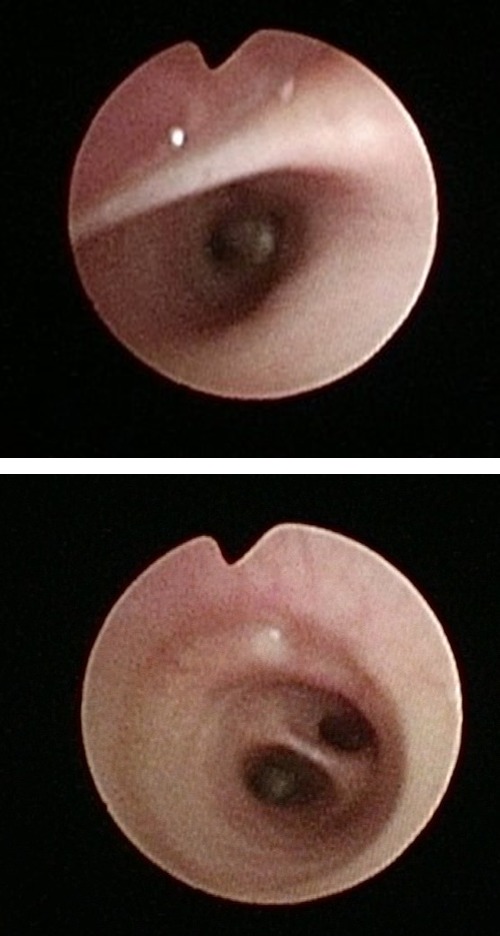
Methods: We report a neonate with EA who underwent dynamic flexible bronchoscopic evaluation prior to primary repair. Initial bronchoscopy under spontaneous breathing assessed the larynx, trachea, airway collapsibility and localized the suspected distal TEF. The examination was continued via laryngeal mask airway (LMA), using positive end expiratory pressure (PEEP). In addition, low-flow oxygen jets were applied via the working channel to explore for further TEFs.
Results: A TEF was identified approximately 2 cm above the carina, with severe posterior intrusion type tracheomalacia at the same level. Using an LMA with 10cm H2O PEEP and 2L/min bronchoscopic oxygen jet insufflation, a second, more proximal fistula became visible approximately 2 cm above the distal fistula. Additional intraoperative bronchoscopy after repair confirmed successful closure of both fistulas.
Conclusion: Preoperative bronchoscopy may improve anatomical mapping and perioperative planning in EA. Detection of a fistula should not conclude the evaluation; additional fistulas require deliberate exclusion. PEEP and low-flow bronchoscopic oxygen insufflation may help expose occult fistulas.
Downloads
Article Details

This work is licensed under a Creative Commons Attribution 4.0 International License.
Share
References
1. Conforti A, Valfrè L, Scuglia M, Trozzi M, Meucci D, Sgrò S, Bottero S, Bagolan P. Laryngotracheal abnormalities in esophageal atresia patients: a hidden entity. Front Pediatr. 2018 Dec 18;6:401. doi: 10.3389/fped.2018.00401
2. Parolini F, Boroni G, Stefini S, Agapiti C, Bazzana T, Alberti D. Role of preoperative tracheobronchoscopy in newborns with esophageal atresia: a review. World J Gastrointest Endosc. 2014 Oct 16;6(10):482–7. doi: 10.4253/wjge.v6.i10.482
3. Dingemann C, Eaton S, Aksnes G, Bagolan P, Cross KM, De Coppi P, et al. ERNICA Consensus Conference on the Management of Patients with Esophageal Atresia and Tracheoesophageal Fistula: diagnostics, preoperative, operative, and postoperative management. Eur J Pediatr Surg. 2020 Aug;30(4):326–36. doi: 10.1055/s-0039-1693116
4. Levine H, Schonfeld T, Handelsman S, Bar-On O, Steuer G, Mei-Zahav M, et al. Low flow intermittent bronchoscopic oxygen insufflation to identify occult tracheo-esophageal fistulas. Respir Med. 2021 Sep;186:106544. doi: 10.1016/j.rmed.2021.106544